Other Pages

Showing posts with label agoura hills. Show all posts

Sunday, January 4, 2015

Back to Posting

It's about time I got back to posting on here! And what better then new birds to clear away some dusty cobwebs?

Late 2014 was not the most bustling of Los Angeles winters, but at such a quiet time of year you can't really have expectations. The biggest "event" was the horde of varied thrushes that have scattered all over southern California. Usually a bird that makes a single appearance each year, the reported total has exceeded 500 in December 2014 alone. 

Apart from being scarce, they are also quite nice to look at. Unfortunately I haven't seen one yet. So instead I will link you to a google image search. They are certainly quite impressive, but the local birdwatchers here are apparently sick of seeing them. 

Friday, March 21, 2014

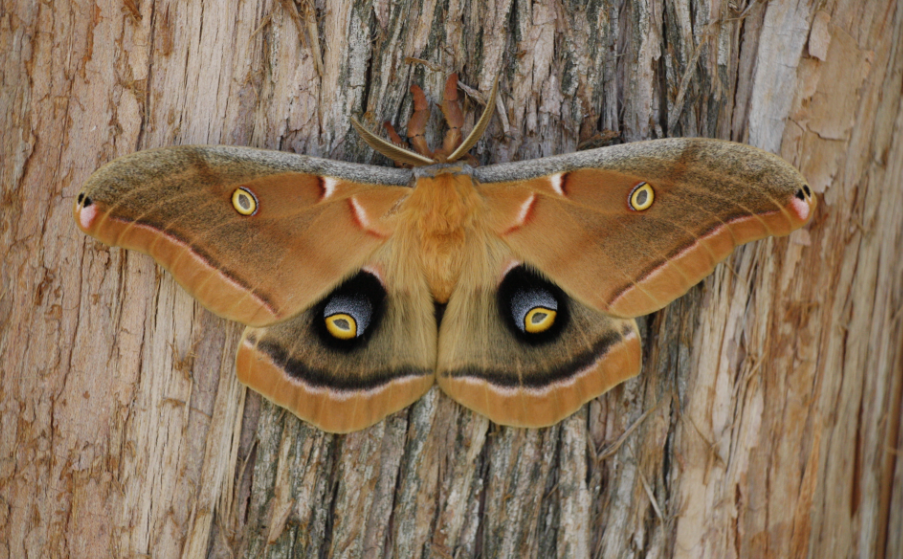
Polyphemus moth

Found this stunning Antheraea polyphemus a few days ago at the high school. Prime condition male it seems, probably emerged on the same day since there was trace of meconium. This is a member of the silk moth family, but I doubt it would be very beneficial commercially. I've seen wing remains of this species before in Canada (evidence of bats usually) but this is the first one I've seen alive so that was nice. The biggest moth I've seen in the US so far.


Thursday, October 31, 2013

Lewis' Woodpecker

Lewis' woodpecker is a fairly erratic winter visitor to Los Angeles, and as far as I'm aware its usually a mountain bird. However they have been seen on passage around here so it wasn't surprising when two were reported at a location within walking distance of Agoura at Cheeseboro Canyon. I have only been here once before and it certainly didn't fail to impress.

Only one of these woodpeckers stayed, and I immediately saw it when entering the parking lot. A long-awaited bird and a very unique woodpecker. No other species resembles its colouring, and its one of those odd flycatching woodpeckers that also pecks trees.

Unfortunately the colouring, while pretty, is rather odd in an indescribable way, so its very hard to get a good look at it and in most views it just looks black. Its like how a hummingbird's iridescence is black one way, but brilliant and resplendent when it simply turns its head an angle, but its a different concept of colour visualizing altogether.

In the best possible position it can look like this.

Sunday, February 24, 2013

Some ducks with funny names

I've had two new ducks recently, both winter visitors, and both at Oak Canyon Community Park.

First off was this female Canvasback.


A few weeks ago I had a pair of (aptly named) Redhead. Had a nice size comparison with the local ducks going on too! Just need a Coot in there. It's a little blurry since there was barely any sun left at the time (5pm).


This winter passage Red-naped Sapsucker appeared at Chumash Park on the 4th.


And I may or may not have an Allen's hummingbird sitting in a nest outside the house right now.


Tuesday, November 6, 2012

Shining Lights

An Anna's with a love for posing for photographs? Well I never! Just had to share these.


Extreme portrait!

Monday, November 5, 2012

Golden-crowned Kinglet 2

The Golden-crowned Kinglets have been around for 3 days. Each day they moved further up the park. Originally they were in the two pines near Argos street, the day after they were in the pines on the hill, and after that they took to the taller pines near the playground. There was only one row of pines left but it seems they skipped them for some reason.

I finally managed to get some decent shots of the crown.

Took me about 300 photos but I finally got there. They are just as restless as the rubies.
 
 
To add to this, I had a Ruby-crowned Kinglet in the same tree, and it had its crest raised up. Ruby-crowns very rarely show off their red crown, so this was quite a pleasure to watch. It only had its crest up when it was in the same tree as the GCKLs, so perhaps there was some indirect territorialism going on here.
Closest I'll ever get to a perfect crown shot. Pose isn't great and that twig is in the way but I can't complain.


 On the 2nd I met two birders who came to follow up my sighting--Dan Cooper and Dinuk Maganamma. Unfortunately they were a day too late, but we had interesting conversations (the best perhaps being where Dan assumed from the reports I send in that I was an old man with a beard!). It seems there are not as many younger birders as I had previously thought. On the 1st I emphasized the movement of the birds in the park, noting how the 2nd was probably the last day to see them. Dinuk needed it for a photo-lifer, I assume Dan had seen this bird multiple times already.

I notice they were trying to call the birds in with tapes. I had tried this on the 3rd day but they were not responsive to the song. The ruby-crowned kinglet, however, responded with its territorial, scolding calls to its own song. I have no idea why the golden-crowns are not so eager to entertain.


Wednesday, October 10, 2012

Nuthatch Memories, and PALM WARBLER x2

The Red-breasted Nuthatch is a high altitude bird, occasionally moving into lower altitudes during winter. This year has been more exceptional than usual, with quite a lot of records. Something about the recent conditions must have encouraged them. It was certainly something being on my daily commute and hearing that unfamiliar yrrnk yrrnk call from the pines, where I've previously had White-breasted Nuthatches, the common species here.


I could not be sure if there was just one, or two birds present, with the scarce looks. However, on another note, later in the day I noted a small brown bird along the dirt slopes nearby. A normal brown bird, probably a sparrow...until the tail flicking begun. At this point, the brown bird is no longer normal.

Tail-flicking is not hugely common in birds, and it's feature can be a good means of quick recognition in some cases. It recalled a situation in Alberta where I came across a similar tail-flicking brown migrant bird, which turned out to be a transient Palm Warbler. While pondering that thought, I had a Nashville warbler pop up in the willows nearby.


Said tail-wagging bird was clearly not too pleased at being overshadowed, so it flew towards me and hopped into a tumbleweed.


And then it hit me, very clearly. Wait, it is a palm warbler! And not one, but two showed up, side-by-side. Although this was uncommon in Alberta, palm warbler is a vagrant in California. In other words, the difference between possibly expected, and not expected at all!


What a find! Interestingly palm warbler is not often seen in palm trees; this name was applied to the finder of the species who indeed collected the first specimen from a palm tree. John Acorn thought the name "bog warbler" would be more fitting, matching the swamps and marshes that the species calls home normally. Hah, an idea for later!


Tuesday, June 19, 2012

Indigo Bunting still at Paramount Ranch

The Indigo is still here. It's been around for quite a while now and many others have now seen it too.

It isn't being very photogenic, however. These pictures are cropped quite a bit. I'm still determined to get some better pictures.


I was very happy to see Yellow Star-thistle in the fields here. I have previously not seen it, and its been one of my most wanted flowers. I mean, a yellow thistle, what could be better than that?


I also found this butterfly, which I thought was a hairstreak simply by it being grey and the fact it was flying around the trees. It had a tail, too, which seemed to support this, though I think it may be a Tailed Copper. Not really sure.

Friday, June 8, 2012

Venus and the Sun

Luckily I still had the solar filters. Extra helpful for taking pictures of solar events like this.
The black circle near the top is Venus.

You can even see the sunspots.

Wednesday, May 23, 2012

Mourning Cloaks

These butterflies are now a common sight all over the place. In Europe they are called Camberwell Beauties.


They are Nymphalids, which is the same family as the Painted Lady, Red Admiral and Tortoiseshells. Out of all of these, it is most like a Tortoiseshell regarding shape of wings and its habits, though it glides quite a lot more than a Tortoisehell.

Monday, May 21, 2012

Annular Solar Eclipse of May 20th 2012

Annular not meaning annual as in each year, mind you. An annular eclipse is where the moon is at a point in its orbit where it is not "large" enough to cover the sun, thus you get an orange ring. Though in California we only got a 86% eclipse at its highest point.


It was certainly troublesome to photograph. No matter how dark the camera setting the sun would always come out as a bright light where you could not make out any of the sun itself. On the display screen (not the viewfinder, obviously) the sun appeared as a black disc, though this was not the eclipse itself, but the light tampering with the sensors. When I actually took the picture, it just came out as a white flash of light. I attach an image taken with my other camera of the view on the screen. The black crescent below is the sun; in a total eclipse it would be the moon that is black, but again this is what bright light does to a camera. I probably shouldn't have even been pointing it up there.


From the festival today at Paramount Ranch, we did get solar viewers, and I managed to take pictures through those:

This image was taken through a solar filter, a specially modified piece of dark translucent
paper. This eliminates all of the sun's glare. Note the sky was actually blue in life; in order to
single out the sun in the image above you have to remove pretty much all light.
There was a slight ashy tint of duskiness to the light, but as it was 6:30pm it would have gone pretty much unnoticed if you were not aware there was an eclipse. Though, the shadows were quite hard to miss. In dappled lighting you get all these neat mini crescents:


And trust me, I was looking hard to find a bird that would perch in the shadows but there was nothing around at all apart from a few Bushtits.

There were two other neat features about the eclipse. One is that it creates a perfect "starburst" lighting without the need of a specialized lens. The second is that the lens flare, those sometimes annoying orbs of light you see when angled to the sun, was made up of crescents too.

Starburst light.


Crescent lens flare as seen in the left side of the image.

In this one there is a complete reflection of the sun on the right.

At 4000/s shutter speed and f-42; the darkest I could make it, and even then you can't
 make out the sun. 
And actually, I did manage to get a shot of the sun that indicated something of the eclipse:

Friday, May 11, 2012

Around the house recently

The Cliff Swallows are everywhere at the moment. Some of them are nesting in buildings around Agoura High School, and the roof on some of these buildings can be reached by standing on tiptoes. I managed to get some extremely close shots of the adults in the nests (though they do not have eggs yet; too early).


I am used to seeing countless Cliff Swallows now, but on the way back at Chumash Park these swallows caught my eye. The brown back was the first thing I saw, but then I found the lack of head colouring. They appear to be Northern Rough-winged Swallows. The pictures are far better than that one dark picture I had at Santa Cruz.
They were flying very low, within metres of me. Migrants like these are
typically not so tame.

Another bonus the day before was this White-throated Swift just over my house. The shape was enough to rule out a swallow. Unfortunately I only managed to get one shot before it flew off. At least its better than the pin-prick sized images I had before.


Also of interest was this Western Skink in the hedges near the creek. It is the first "lizard" I've seen here which isn't a Western Fence Lizard.

This ladybird larva was putting on its best Long-horned Beetle/Cerambycid impression with the help of a prop. It had me fooled for a while.