Other Pages

Showing posts with label 2014. Show all posts

Saturday, September 6, 2014

4th September

I never found the decently early time of 5am to be either a nuisance or a surprise. I had been up earlier before for pelagic trips, or mere walks, well into the 4am realm. Today was the spontaneously planned Dedicated Search survey, my first real trip with the Sea Watch Foundation. Dedicated Search was a noun that as I learned has become synonymous with "erratic", "irregular" and "impromptu" at the same time. Such a survey erased everything on the schedule for that entire day, summoned all volunteers regardless of what they were doing or where they were, and combined all resources into a (dedicated) search for marine mammal activity. The primary goal was to cover a random line transect point, which offered its own data in terms of spatial use and population density in the local 3 mammal species.

The early start was intended to get all of us on the boat by 6:20am--as it happened it was running a bit late and did not really come until about 6:40, but at least the sky was nice this morning.

Dawn over New Quay harbour.

The sea was thankfully quite flat this morning, with few ripples and remaining mirror-clear for a great portion of the initial few hours. The first 2 bottlenose dolphin sightings preceded the boat boarding and therefore did not make it onto the official sightings forms as more than a notation at the top of the sightings sheet.

A pair harbour porpoises around 7:10am were the first officially recorded cetacean sightings, though 2 grey seals, one hauled on the rocks and a second in the water were seen before hand. Perhaps my only fear was finally seeing a harbour porpoise and not having a camera on hand, which happened in the first 30 minutes! I could, however, be content that at least there was little that could have been "worse" from that point on. A cliff pass added a few land birds to the daily "list" including 2 chough, 3 ravens, jackdaws and 2 red kites, though the Sea Watch Foundation does not keep records of anything avian, and neither does the Marine Wildlife Centre for that matter.

An initial bottlenose dolphin sighting was had at 7:40am along the coastline of Llangrannog of 2 individuals, though we were just over 2km out at sea but Dr. Dussán-Duque judged them to be too far. Yet 10 minutes later the next pair, just over 600m, was selected for photo-ID and behaviour recording purposes. The initial pair revealed other pairs, and then others, totaling 7 adults and 3 calves, perhaps including the 2 individuals that we did not approach earlier. The 4 subgroups merged and split as the encounter came and went, and both feeding behaviour, as well as one adult that was, in all decent terms, punting a jellyfish out of the water. The jellyfish itself was most likely Cyanea lamarckii, a regular species in Wales. There was plenty of photo opportunity if you were lucky to catch them fast enough.


Waving hello?

Does anyone remember the game Ecco the Dolphin where you headbutt blue jellyfish?
With that aside, there was little of interest for the rest of the 7 hours! A 1cy Mediterranean gull was the only notable bird in this first hour, the only of its species recorded throughout. A fairly recent traveler to the south coast, this gull is still relatively uncommon this far north but it is spreading quite rapidly and can't really be called rare any more.

The only other two events of interest was a dead seal, and a "sunfish" which revealed itself to be a quite lost and deflated balloon about 2km out to sea. The balloon, whose design featured Elsa from the near-viral Disney film Frozen, was perhaps owned by a child who quite literally "Let it go". The balloon was, naturally, rescued to save any environmental harm it may have caused.

In other notes, the usual birds were present in small numbers, including kittiwake, guillemot, fulmar, manx shearwater and great black-backed gull. A few swallows, a crane fly, small tortoiseshells, and some other miscellaneous insects seemed to be oddities this far out to sea. It is possible to see migrating birds fly towards shore from over the sea, as these swallows did, but the species only flies towards the UK in the spring when they fly up from continental Europe. I can only guess that they flew over from Ireland, intercepting Wales as they headed towards France.

Great black-backed gull exhibiting the reasoning behind its name.
All in all it turned to be not a bad trip. Those on photo-ID, behaviour and observer duties were left without anything to do beyond those first encounters, save the necessity of having to remember to write down boat data every 15 minutes (this task is done by both primary observer, independent observer, and effort collector to ensure that measurements are consistent and, most importantly, correct).

And, just because I thought it was cool, here is a variant of the common field grasshopper from the Cwmtydu segment of the coastal path above New Quay. This is a hugely variable species, that can be coloured anywhere from green, brown, orange, beige, grey and...apparently pink! I once heard the probability of such a erythristic individual is estimated at 1 in 500. Either way, they are quite uncommon.

Pink variant common field grasshopper.


Sunday, June 1, 2014

Birds Do Forget

When you've been around birds enough you have some odd experiences. Here is one of them.

So there's a Bullock's oriole up in a tree. It very clearly sees me walk up to the tree, in fact it interrupts its feeding to glare at me for a few seconds (and trust me its pretty obvious when a bird is looking at you and knows you are there). So then it continues feeding, [insert 4 minutes of observation here] and then it apparently forgets I'm there.

I say that because it flies down to a branch right in front of my face, freezes, freaks out because it sees me close, and darts off a few trees down and then never lets me get close ever again. But it knew I was there originally, so surely this never should have happened. If you are picking weeds from the garden and see a bee's nest in the tree nearby, you are not going to get up after picking the dandelions and then walk straight into the bee's nest because you forgot it was there. (And yes you'd probably run away as soon as you saw the bee's nest but still).*

 Happens this one is a pretty bird to look at too.

It's an earwig. Yum.


*I was previously going to use an adder on a path as an example but no one in California knows what that is so...

Hansen Dam Holidays

While Hansen Dam is a mere 35 miles away it is enough to feel like a holiday; not only is it extremely rare (perhaps annually or biannually) to get out this far from home but the environment was far out enough to be uniquely different to the same repetitive trees and chaparral canyons of Agoura.

The three targets for this location were yellow-breasted chat, Bell's vireo and the rather dubious Lawrence's goldfinch. I have not generally covered my many year long search for Lawrence's goldfinch on this blog, and since I probably won't see one anytime soon I still have time to speak of it.*1


Hansen Dam seemed like a good bet. This late in the year, it was the only location where the goldfinch was even being reported, and it had been seen in multiples every day for the past few weeks. They were even seen in greater numbers on the day I was there (and at the exact time I was there for that matter), but guess what, I didn't see any. I've spent a lot of money trying to see this bird but it isn't showing. The other two goldfinch species, lesser and American, were quite abundant in the location however.

Yellow-breasted chat (which is actually a warbler though if you see one yourself you'll wonder how a fat chubby harsh-sounding thing can be classified with the small singing warblers) showed itself on the top of a tree right away, and made a few casual appearances throughout the visit. It made its preemptive appearance with calls from the top of a bare tree, and in a way it was relatable to Australian birdlife where several species gave the same behaviour from more tropical canopies (though as I learned this was not the "typical" call of the bird). After that it resumed its expected row of mimicry, adding itself to the chorus of dreaded creatures by amateur birders with northern mockingbird, California thrasher, Bewick's wren, lesser goldfinch, among others (which I was perhaps not so distant in the past).

I pictured the chat as a skulker, and that it was generally, though the fact it even rose up to the open and on a regular basis was surprising enough.
While pursuing the chat I had heard the Bell's vireo singing its odd buzzy song from afar and went on a bit of an off-road excursion to find it (note: the bird definitely did not sing as frequently as in that link: realistically the spacing between the phrases was closer to 30 seconds+ which made it quite hard to follow when this song was the only indication of its location). The bird, despite having the reputation of its cousins, was simple to locate and see. Vireos are a tree-top bird that often favour cover and leafy trees, and can be an absolute nightmare to get good (or any) looks at. Perhaps the fact that these trees were low and not thick with leaves helped, but the birds did not act elusive at all. I had better views of this bird than the chat. Notably, unlike its cousins, its song was very quiet even when in close proximity. A unique member of its family for sure. 

Perhaps not the best looker in the bird world, but for what it lacked in distinction colour-wise it made up for
in behaviour -- but for those familiar with vireos, this bird is very visually unique.
Oh and uh...if anyone cares, here's a least bittern which found its way into the background of one of my pictures a few weeks back at Sepulveda while I was with Mr. Cooper on a local scouts outing. It's a rather rare bird but relatively well-known at the location (though, I did see it fly into the reeds, just not when it peeked its head out).

It's there. I promise.


*1
////cue LAGO rant
There are very few birds that could be labelled as both ubiquitous yet elusive and erratic simultaneously. As a nomadic species, it is a rather random migrater, and overall it is rather uncommon. But they are funneled through the Los Angeles area (notably in March it seems) so they are, at times, considered "locally common". Yet, in what is coming to a 3 year residence in this state, it is the one bird I have not yet encountered, and as it happens it is inconveniently the only bird I actually genuinely cared about seeing here. There is absolutely no reason why I shouldn't have seen one so far -- most people I meet don't believe me when I tell them my bird list along with the fact I have not seen this species -- its a random and unpredictable bird but going this long without seeing them really just doesn't happen. 

However, as an early rising bird that often disappears later than 8am, its difficult to even get at the location at the time under a family schedule. But that assumes I can even get to the location which generally is rare in itself. The bird has a very diagnostic high-pitched repeating call often given in quick succession. I've heard it many times before--but not from the species itself, instead from its close cousin the lesser goldfinch which is known for occasional mimicry. Drives me nuts.
////end rant

Friday, March 21, 2014

Polyphemus moth

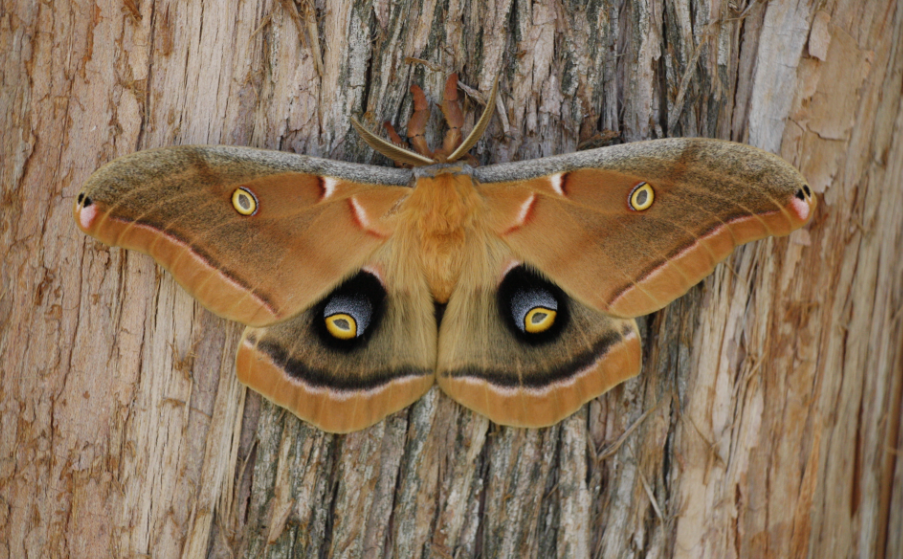
Found this stunning Antheraea polyphemus a few days ago at the high school. Prime condition male it seems, probably emerged on the same day since there was trace of meconium. This is a member of the silk moth family, but I doubt it would be very beneficial commercially. I've seen wing remains of this species before in Canada (evidence of bats usually) but this is the first one I've seen alive so that was nice. The biggest moth I've seen in the US so far.


Sunday, February 23, 2014

Arroyo Simi


There are always those birds, generally common, that some people just never manage to see. I had my fair share of "bogey birds" (a term often applied to regular species that an individual birder has missed out of often) which I was interested in ticking off, and understandably so.

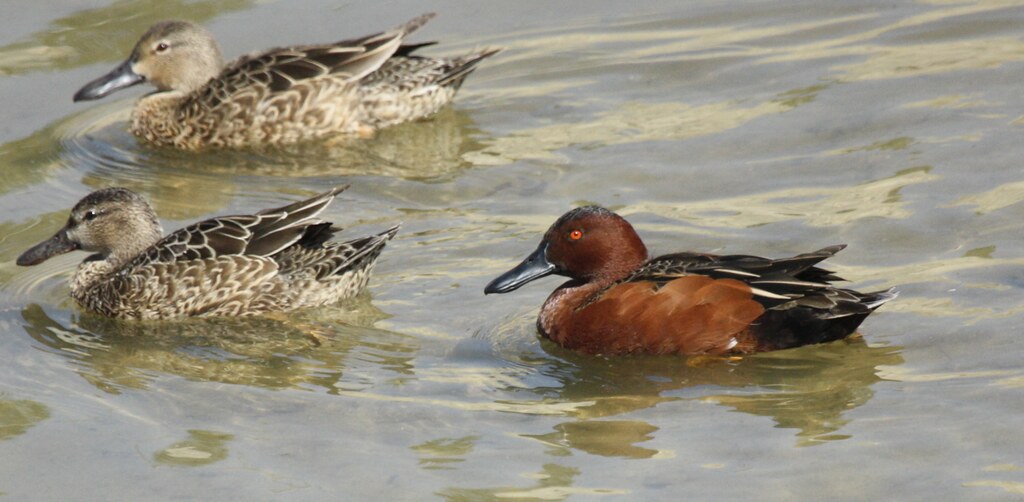
One of my long standing species is cinnamon teal, a migrant/winter passage bird in California. I had also wanted this bird when I lived in Canada, where it was uncommon but regular on most lakes, but even here in California where they are relatively widespread I had not been able to find them. It was impossible to appreciate this bird without seeing it myself--in both colouration and its tiny size (about half the size of the mallards around). I picked up on word of recent sightings of this bird, as well as a wide variety of other neat birds, on a section of the LA river about 20 minutes drive from my residence. And the cinnamon teals were apparently very regular there, which came as a great surprise to me since I was not aware I could have any chance of seeing them within an hour--this river was pretty much within home grounds in comparison.

The section was termed Arroyo Simi and judging by the historic sightings published by other birders on eBird I could see I wasn't being mislead. Sometimes up to 20 cinnamon teals were reported along this relatively short section of river. The catch was that the last sighting of a cinnamon teal was a single bird seen about 2 weeks ago, and a checklist from yesterday did not include this species at all, so I was rather put off in that effect. I started searching for other places but came up short, so I took the chance.

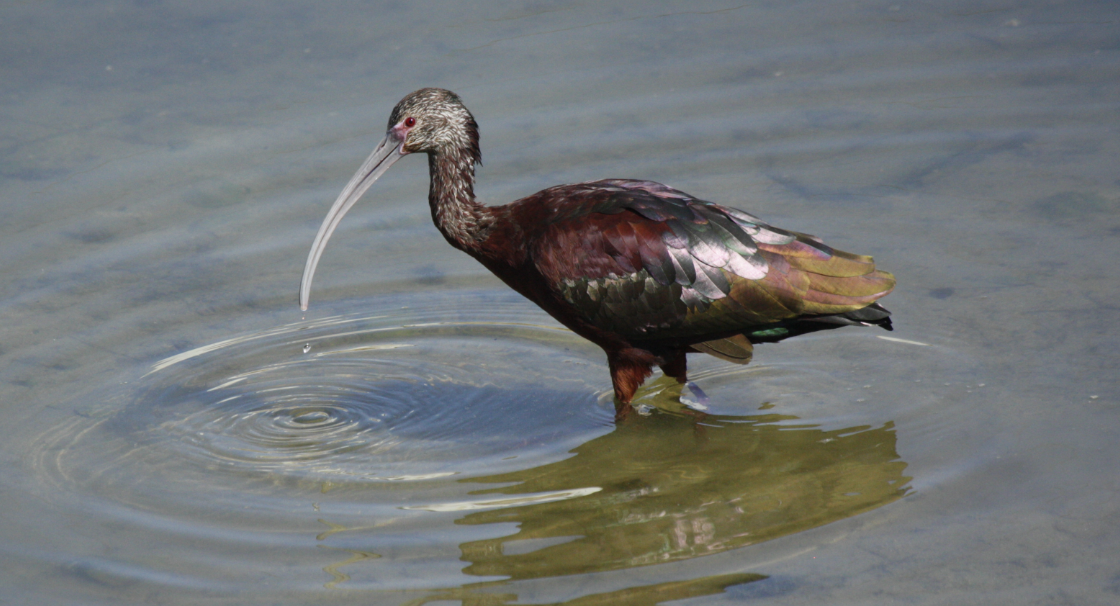
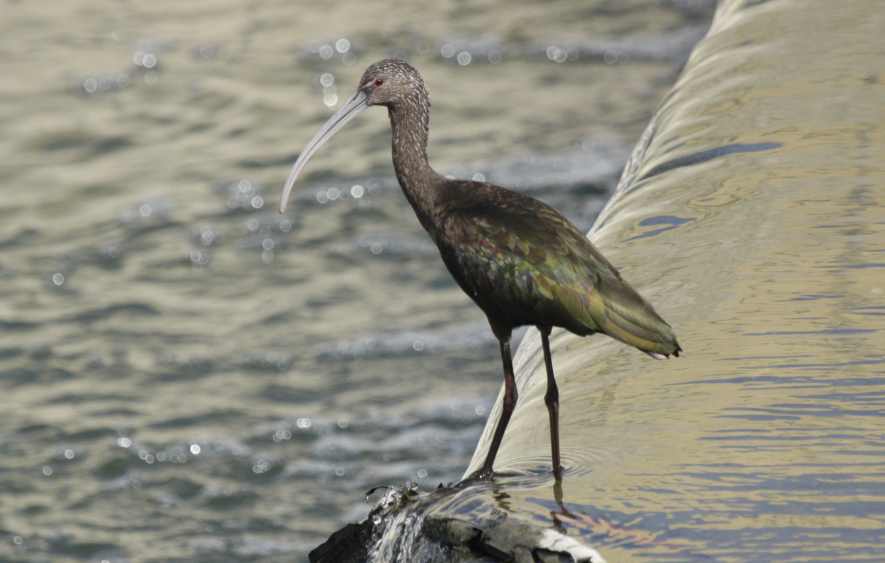
When I saw the river it was rather shallow, and not the cleanest in the world as it had its fair share of rubbish strewn all over its waters. The first bird I saw were the ubiquitous american coots, a bird that, if there is any trace of water at all, is more than willing to share its omnipresence. The second bird I saw was a small reddish-brown duck. Yes, that was a male cinnamon teal, not even thirty seconds in. I took a detour around a bridge to get the sunny side of the bird, and on the way I saw a white-faced ibis staring back at me. Not a bird I was expecting to see, but one that has left its presence on a few recent sightings of this river. I didn't want to hope that I would see one, since they are not very common and I probably would have been left disappointed. I counted about 5 or 6 that day, and a person I met there said he saw an upwards of 15 within a period of 20 minutes earlier in the day. These ibis have extraordinary colours, with somewhat prismatic iridescence that varies from pink to green to blue; they really stand out when they take off. I saw many more cinnamon teals of both genders as well--they really add a different spectrum to the brown range.

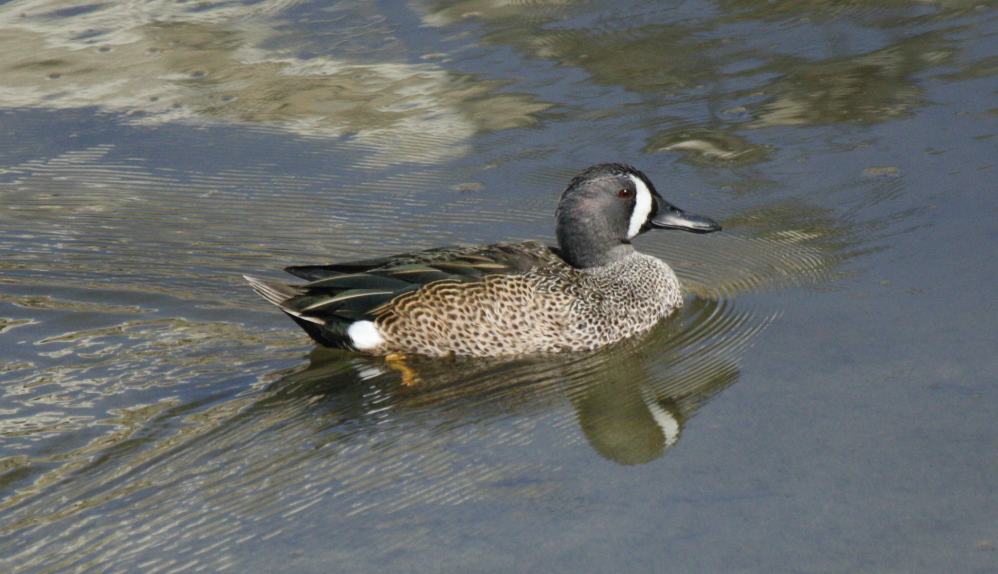
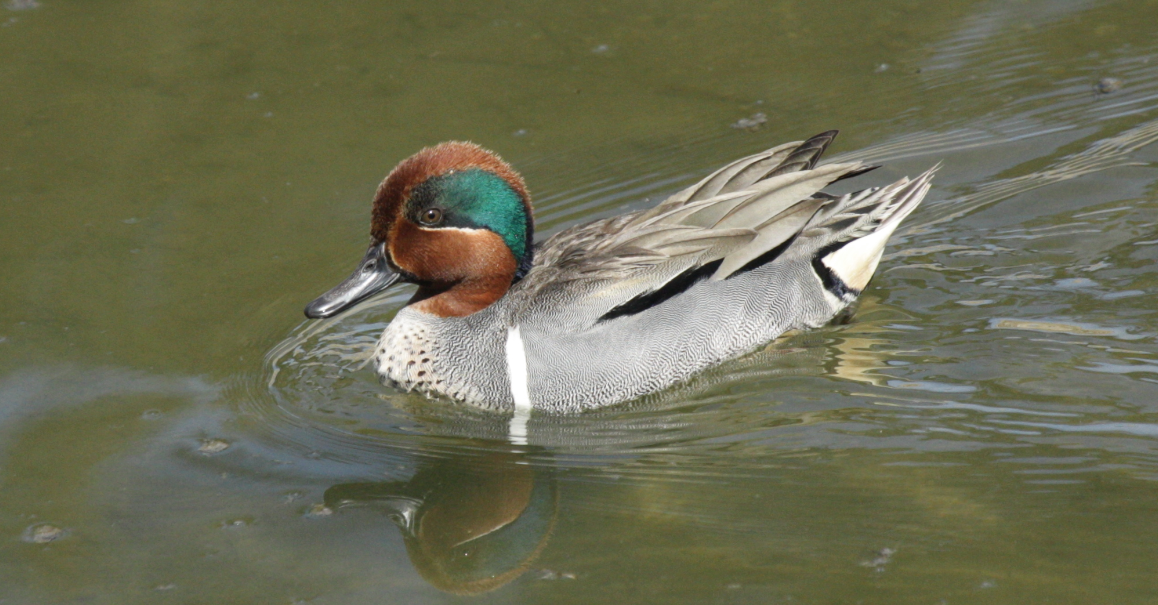
With that aside, the place was full of life. The location definitely outweighed my expectations. I did not expect to see more than mallards, but in a matter of moments I had very nice sightings of gadwall, cinnamon teal, green-winged teal, blue-winged teal, bufflehead, lesser scaup, ruddy duck and hooded merganser (and of course mallards). I guess you could say my duck expectations were met by 900%. Before the return trip I had also seen a belted kingfisher, greater (?) yellowlegs, black-winged stilt and spotted sandpiper, birds I had seen before but with the exception of the first I had not yet seen in California before (additionally gadwall, green and blue-winged teal, lesser scaup I have never before seen in this state). I ended the day with a decent 42 species, a number that would have increased exponentially if I happened to arrive earlier in the morning no doubt!  A very nice day, and probably some of the best photos I have ever taken. Let no one fool you--ducks are not all boring!
Cinnamon teals.
Blue-winged teal, though you can't see the blue wing like this.


Green-winged teal males.
Another one for good measure.
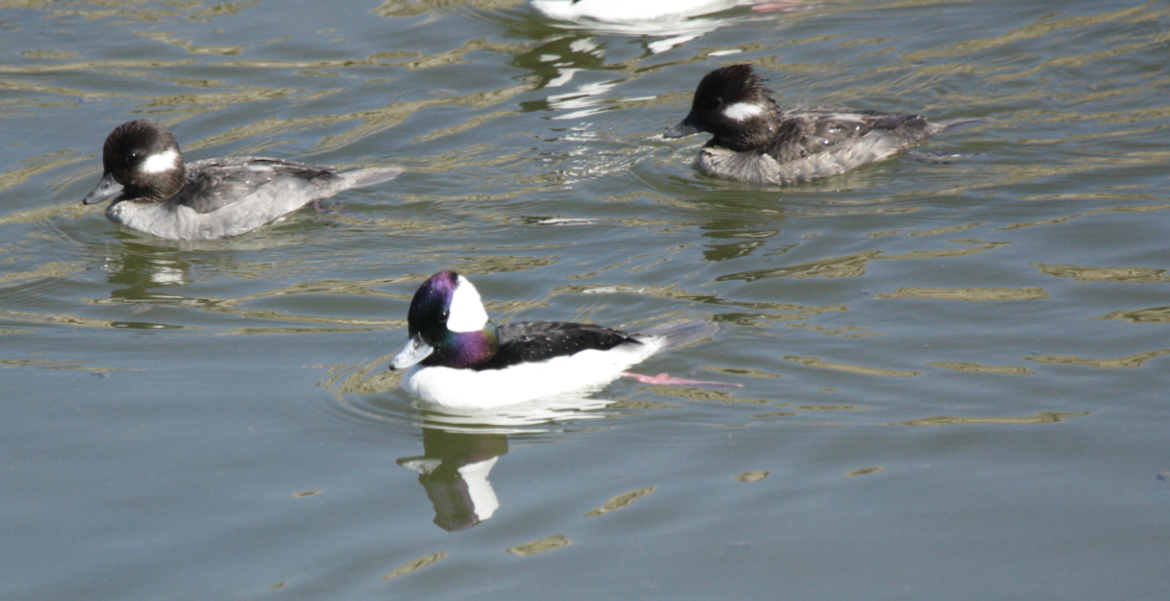
Buffleheads. I have better pictures, but I wanted to show the iridescence.
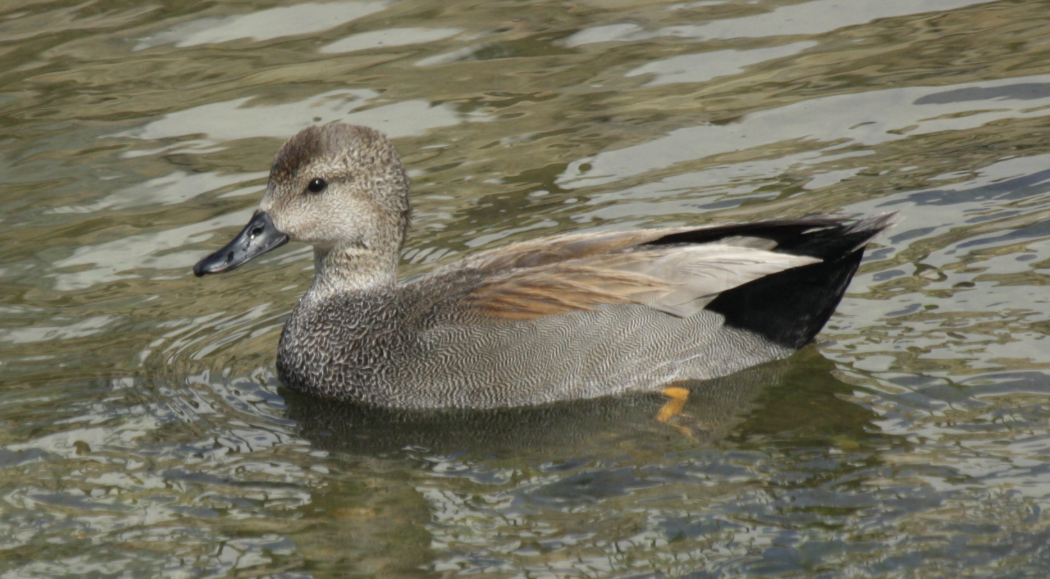
Gadwall male. One of the more drab species, but it still has an attractiveness.
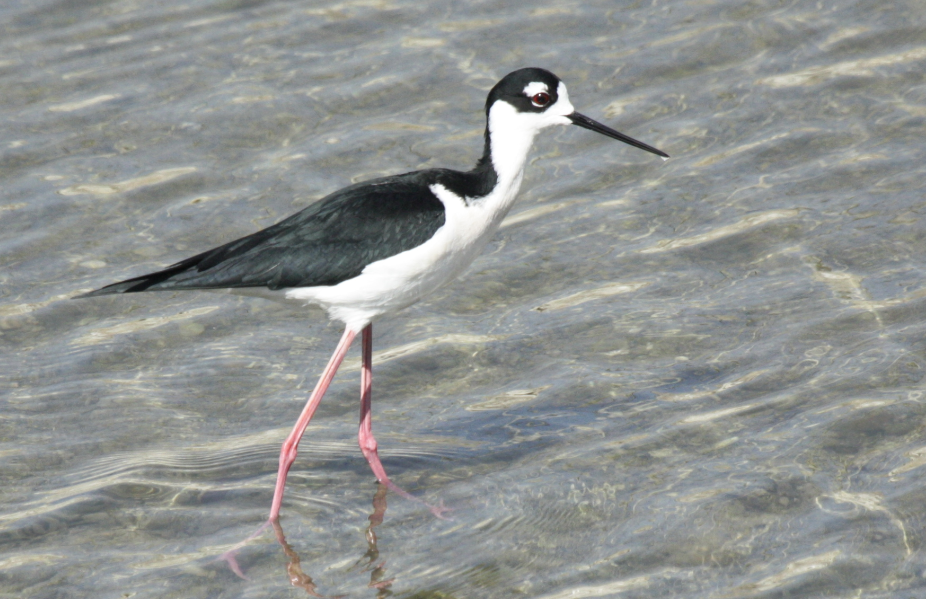
Black-winged Stilt.
White-faced Ibis.
White-faced Ibis -- slightly greener bird.
Composite image demonstrating flight iridescence.