A survey from Aberystwyth on September 28th revealed an unusual dolphin. Unfortunately it was not very cooperative, but in appearance it could have been taken for a juvenile bottlenose on its lonesome.
According to the crew, it had emerged quite close to the front of the boat initially, reported to bear an unusual coat of little dark speckles. The boat was called to a sudden halt, but at the speed we were going, it seemed the dolphin was more than spooked and it did not return again. We paused for several minutes, eyeing the ripples and drifts of tides, but no sign.
"It didn't look like a Tursiops," our lead watcher affirmed. I couldn't argue; there was something unusual about the one that got away, but it wasn't overly, strikingly different to a usual bottlenose. But there was another group of dolphins very similar, belonging to the Stenella genus. Its closest member, the Atlantic spotted dolphin, normally inhabits seas beyond the Mediterranean. She wasn't immediately confident that it was one, and for good reason: it was a major rarity anywhere in the north Atlantic.
Of course they then look to me. "Did you get any pictures?" they ask, for which I can't offer an optimistic reply. No internet information exists on Atlantic spotted dolphin in the UK, or even in Franc. It was not the first possible spotted dolphin reported this year, though none of the reports had been confirmed or photographed, a fate that this one will also share.
Considering the rare and vagrant Cetaceans known in the UK in the past, it is hardly impossible. Birds are the best example of vagrancy, we've seen "megas" that have flown thousands of kilometres from their native range from western Asia, Africa and America. The UK's sole record of ancient murrelet, a central Pacific bird that will not fly over land except in hurricanes, would have traveled all up the Pacific Coast, along the Arctic Ocean, down the Atlantic through Greenland and all the way over the North Sea to reach the UK. So then the question is why has the spotted dolphin, something which by rarity is hardly comparable to some foreign birds, has not been "officially" seen in the UK before?
This question is far more easy to answer. The extreme similarity of the Atlantic spotted dolphin to the bottlenose dolphin by default makes it susceptible to being highly overlooked. I saw our dolphin from no more than 100 metres off, albeit silhouetted, but I never would have given it a second look. If it wasn't for the markings, I doubt anyone would have raised an eyebrow. Most dolphins are seen far out to sea, and even binoculars or telescopes might not be enough to see the details. The only truly obviously diagnostic difference are in the spotted markings, which are tricky to see unless in close proximity, and you need a boat for that, and the sacred license to approach them in the first place.
The issue with many sightings is that well-marked bottlenose, especially if only a dorsal view is seen, could be mistaken. This is supported by the issue that markings usually increase in density as they travel up the animal, so the back could easily be as spotted as the confusion species in question (but if it were to breach, then the rest of it would be obviously unspotted; spotted dolphins should be equally spotted all over except for juveniles).
It is also worth noting that unlike birds, their complete territory is far harder to survey, and for the most part impossible from land. A speculation was that warming seas could encourage them further north. The eBird report exists here.
*(bearing in mind this is a bit of a generalization, as many dolphin pods are in fact not tolerant of boats at all even in Wales).
**Dedicated surveys only allow a maximum of 5 minutes with each encounter before we must move on, whether it is to keep the survey going or to reduce interference with the animal's natural behaviour.
Showing posts with label Wales. Show all posts
Showing posts with label Wales. Show all posts
Wednesday, January 7, 2015

Saturday, September 20, 2014
12th September
The darker morning hours meant that the later it was on the calendar, the more sleep we would all get. For instance, most boat survey departure times were now beyond 6 and 7am compared to the 5am and earlier routine earlier interns had to follow. I don't think it really meant a difference, but there did seem to be some psychological appreciation by the other interns, who seemed much more enthusiastic at getting an extra hour of sleep. It does seem true that getting up at 5am sounds much earlier than getting up at 6am.
12th September was the Aberystwyth survey. The primary benefit was that the boat here, Ma Chipe, was much faster, reaching 14+ knots, in contrast to the 5-6 knots capability of the Dunbar. This meant that it was easier to reach the outer transect survey areas. The relevant SAC areas offshore, both the Cardigan Bay and the Pen Llŷn a'r Sarnau, were split by the Sea Watch Foundation into inner and outer transect regions. The outer transect surveys were just extended versions of the inner, encompassing both the inner and outer areas.

On board Ma Chipe, there was a bit of misinformation on what area we were surveying however. Whatever the case, we ended up just randomly surveying the Pen Llŷn SAC instead, even though it wasn't strictly part of our main research focus. I don't have a map showing the route we took that day, but I could probably borrow the GPS coordinates for the day if I needed too. There were pessimistic rumours spreading that there were little or no dolphins around this area, supported by the facts that there were far fewer fish than usual. However, of all the recent surveys, I don't think we've ever recorded so many dolphins before.
I'm just going to post head shots because everyone likes those.


An odd thing to note were these random swarms of flies far out to sea. They were mixed swarms of a whole variety of flies, midges, gnats, crane flies and other oddities. We all ended up covered in them whenever we stopped in those areas.
A shallow reef halted our progress on one of the transects, so we had to take a different route. The clouds started pouring in but some unique sky on offer.

A dunlin flying out to sea towards Ireland seemed to serve as an omen to the coming fall migration in the area, and common scoter was relatively common. The weather is starting to drop and it's getting colder by the day. Better get that winter coat out...
12th September was the Aberystwyth survey. The primary benefit was that the boat here, Ma Chipe, was much faster, reaching 14+ knots, in contrast to the 5-6 knots capability of the Dunbar. This meant that it was easier to reach the outer transect survey areas. The relevant SAC areas offshore, both the Cardigan Bay and the Pen Llŷn a'r Sarnau, were split by the Sea Watch Foundation into inner and outer transect regions. The outer transect surveys were just extended versions of the inner, encompassing both the inner and outer areas.
 |
| Inner and outer transect maps, courtesy of Sea Watch Foundation. |
On board Ma Chipe, there was a bit of misinformation on what area we were surveying however. Whatever the case, we ended up just randomly surveying the Pen Llŷn SAC instead, even though it wasn't strictly part of our main research focus. I don't have a map showing the route we took that day, but I could probably borrow the GPS coordinates for the day if I needed too. There were pessimistic rumours spreading that there were little or no dolphins around this area, supported by the facts that there were far fewer fish than usual. However, of all the recent surveys, I don't think we've ever recorded so many dolphins before.
I'm just going to post head shots because everyone likes those.
An odd thing to note were these random swarms of flies far out to sea. They were mixed swarms of a whole variety of flies, midges, gnats, crane flies and other oddities. We all ended up covered in them whenever we stopped in those areas.
 |
| But a small selection of flies present, including the late-flying cranefly Tipula confusa on the far right minus one leg. Other than that, and the assumption that the top left is some relative of a St Mark's fly, I have no clue what any of these are. |
 |
| The reef is visible as the calm section between two slightly rougher tides. |
 |
| Same copyright as other images, just forgot to add watermark. |
A dunlin flying out to sea towards Ireland seemed to serve as an omen to the coming fall migration in the area, and common scoter was relatively common. The weather is starting to drop and it's getting colder by the day. Better get that winter coat out...
Saturday, September 6, 2014
4th September
I never found the decently early time of 5am to be either a nuisance or a surprise. I had been up earlier before for pelagic trips, or mere walks, well into the 4am realm. Today was the spontaneously planned Dedicated Search survey, my first real trip with the Sea Watch Foundation. Dedicated Search was a noun that as I learned has become synonymous with "erratic", "irregular" and "impromptu" at the same time. Such a survey erased everything on the schedule for that entire day, summoned all volunteers regardless of what they were doing or where they were, and combined all resources into a (dedicated) search for marine mammal activity. The primary goal was to cover a random line transect point, which offered its own data in terms of spatial use and population density in the local 3 mammal species.
The early start was intended to get all of us on the boat by 6:20am--as it happened it was running a bit late and did not really come until about 6:40, but at least the sky was nice this morning.
The sea was thankfully quite flat this morning, with few ripples and remaining mirror-clear for a great portion of the initial few hours. The first 2 bottlenose dolphin sightings preceded the boat boarding and therefore did not make it onto the official sightings forms as more than a notation at the top of the sightings sheet.
A pair harbour porpoises around 7:10am were the first officially recorded cetacean sightings, though 2 grey seals, one hauled on the rocks and a second in the water were seen before hand. Perhaps my only fear was finally seeing a harbour porpoise and not having a camera on hand, which happened in the first 30 minutes! I could, however, be content that at least there was little that could have been "worse" from that point on. A cliff pass added a few land birds to the daily "list" including 2 chough, 3 ravens, jackdaws and 2 red kites, though the Sea Watch Foundation does not keep records of anything avian, and neither does the Marine Wildlife Centre for that matter.
An initial bottlenose dolphin sighting was had at 7:40am along the coastline of Llangrannog of 2 individuals, though we were just over 2km out at sea but Dr. Dussán-Duque judged them to be too far. Yet 10 minutes later the next pair, just over 600m, was selected for photo-ID and behaviour recording purposes. The initial pair revealed other pairs, and then others, totaling 7 adults and 3 calves, perhaps including the 2 individuals that we did not approach earlier. The 4 subgroups merged and split as the encounter came and went, and both feeding behaviour, as well as one adult that was, in all decent terms, punting a jellyfish out of the water. The jellyfish itself was most likely Cyanea lamarckii, a regular species in Wales. There was plenty of photo opportunity if you were lucky to catch them fast enough.

With that aside, there was little of interest for the rest of the 7 hours! A 1cy Mediterranean gull was the only notable bird in this first hour, the only of its species recorded throughout. A fairly recent traveler to the south coast, this gull is still relatively uncommon this far north but it is spreading quite rapidly and can't really be called rare any more.
The only other two events of interest was a dead seal, and a "sunfish" which revealed itself to be a quite lost and deflated balloon about 2km out to sea. The balloon, whose design featured Elsa from the near-viral Disney film Frozen, was perhaps owned by a child who quite literally "Let it go". The balloon was, naturally, rescued to save any environmental harm it may have caused.
In other notes, the usual birds were present in small numbers, including kittiwake, guillemot, fulmar, manx shearwater and great black-backed gull. A few swallows, a crane fly, small tortoiseshells, and some other miscellaneous insects seemed to be oddities this far out to sea. It is possible to see migrating birds fly towards shore from over the sea, as these swallows did, but the species only flies towards the UK in the spring when they fly up from continental Europe. I can only guess that they flew over from Ireland, intercepting Wales as they headed towards France.
All in all it turned to be not a bad trip. Those on photo-ID, behaviour and observer duties were left without anything to do beyond those first encounters, save the necessity of having to remember to write down boat data every 15 minutes (this task is done by both primary observer, independent observer, and effort collector to ensure that measurements are consistent and, most importantly, correct).
And, just because I thought it was cool, here is a variant of the common field grasshopper from the Cwmtydu segment of the coastal path above New Quay. This is a hugely variable species, that can be coloured anywhere from green, brown, orange, beige, grey and...apparently pink! I once heard the probability of such a erythristic individual is estimated at 1 in 500. Either way, they are quite uncommon.

The early start was intended to get all of us on the boat by 6:20am--as it happened it was running a bit late and did not really come until about 6:40, but at least the sky was nice this morning.
 |
| Dawn over New Quay harbour. |
The sea was thankfully quite flat this morning, with few ripples and remaining mirror-clear for a great portion of the initial few hours. The first 2 bottlenose dolphin sightings preceded the boat boarding and therefore did not make it onto the official sightings forms as more than a notation at the top of the sightings sheet.
A pair harbour porpoises around 7:10am were the first officially recorded cetacean sightings, though 2 grey seals, one hauled on the rocks and a second in the water were seen before hand. Perhaps my only fear was finally seeing a harbour porpoise and not having a camera on hand, which happened in the first 30 minutes! I could, however, be content that at least there was little that could have been "worse" from that point on. A cliff pass added a few land birds to the daily "list" including 2 chough, 3 ravens, jackdaws and 2 red kites, though the Sea Watch Foundation does not keep records of anything avian, and neither does the Marine Wildlife Centre for that matter.
An initial bottlenose dolphin sighting was had at 7:40am along the coastline of Llangrannog of 2 individuals, though we were just over 2km out at sea but Dr. Dussán-Duque judged them to be too far. Yet 10 minutes later the next pair, just over 600m, was selected for photo-ID and behaviour recording purposes. The initial pair revealed other pairs, and then others, totaling 7 adults and 3 calves, perhaps including the 2 individuals that we did not approach earlier. The 4 subgroups merged and split as the encounter came and went, and both feeding behaviour, as well as one adult that was, in all decent terms, punting a jellyfish out of the water. The jellyfish itself was most likely Cyanea lamarckii, a regular species in Wales. There was plenty of photo opportunity if you were lucky to catch them fast enough.
 |
| Waving hello? |
 |
| Does anyone remember the game Ecco the Dolphin where you headbutt blue jellyfish? |
The only other two events of interest was a dead seal, and a "sunfish" which revealed itself to be a quite lost and deflated balloon about 2km out to sea. The balloon, whose design featured Elsa from the near-viral Disney film Frozen, was perhaps owned by a child who quite literally "Let it go". The balloon was, naturally, rescued to save any environmental harm it may have caused.
In other notes, the usual birds were present in small numbers, including kittiwake, guillemot, fulmar, manx shearwater and great black-backed gull. A few swallows, a crane fly, small tortoiseshells, and some other miscellaneous insects seemed to be oddities this far out to sea. It is possible to see migrating birds fly towards shore from over the sea, as these swallows did, but the species only flies towards the UK in the spring when they fly up from continental Europe. I can only guess that they flew over from Ireland, intercepting Wales as they headed towards France.
 |
| Great black-backed gull exhibiting the reasoning behind its name. |
And, just because I thought it was cool, here is a variant of the common field grasshopper from the Cwmtydu segment of the coastal path above New Quay. This is a hugely variable species, that can be coloured anywhere from green, brown, orange, beige, grey and...apparently pink! I once heard the probability of such a erythristic individual is estimated at 1 in 500. Either way, they are quite uncommon.
 |
| Pink variant common field grasshopper. |
Monday, July 29, 2013
Cardigan Bay by Sea (5th July, 2013)
I didn't imagine that I'd get on a boat any time during my stay here, since pelagics tend to be quite booked up in advance and not many places in the UK offer them to begin with. Yet, that prediction was quite false. The Cardigan Bay Marine Wildlife Centre offered survey trips for Cetacea out in Cardigan Bay. Originally I wasn't really enthusiastic since I sought volunteer work and experience rather than sitting in the sidelines, though in the end the former was also achieved.
There was a 8-hour survey trip for the "determined" people. Though some people on the boat were the sort of people that wanted guaranteed sightings of dolphins and nothing more, but its probably unfair to judge that. I still sought a few birds, namely kittiwake, puffin and manx shearwater which occurred off shore. I was informed that it was a possibility to see any or all of those birds, but it was by no means guaranteed. I was also told it went quite a bit off-shore into fairly deep water so that was also promising.
As we drove into New Quay I found a pale tussock moth on the window of a cafe (yes, while the car was in motion). As soon as the car parked I rushed off down the road to relocate it. It was indeed a pale tussock moth, and not a species I had seen before though they are supposedly fairly common.
The boat left at around 9am and there were bottlenose dolphins in the harbour before anyone even got on the boat. It was not the closest of encounters and though it would be amusing to think that some people regretted spending money on an 8 hour trip for them when they were just here, I imagine it only inspired them to stay on board. The captain struggled to get in the health and safety lecture as people were far too absorbed with other things.
A few cormorants lingered in the waters here, but they would undoubtedly be replaced later on by shags, or at least I thought so. Alcids started making appearances. You could just about make out some of them from shore if you squinted hard, but out here they were hard to miss. Both razorbill and guillemot were present.
Within only minutes of the harbour was this funny gull called a kittiwake. (It turns out that some of the shots I took of gulls well off-shore a few days ago were kittiwake, but at the time I could not see enough details in the photos to confirm the ID then).
Nearly all the gulls out here were kittiwake, save the odd herring or great black-backed. Alcids continued, and the manx shearwaters were soon all over the place. A "possibility", they said. They were flying everywhere. (In a similar fashion to the kittiwake, I had images of one shearwater in my multiple "photograph dark specks far out to sea on the horizon and pray you can identify them" shots from up on the cliffs a few days ago, so this is not my first sighting of the bird).
Not many minutes after that a dark bird flew across the front of the boat, and that was an Atlantic puffin. Apparently no one else was aware of it, since the survey team (the people who wrote down sightings) gave a confused look and demanded to see photos as proof. After that I was uncertain how much I could trust the completeness of the sightings they wrote down, but to be fair birds were not the main focus of their surveys.
So far this blog is looking rushed. There is a flurry of photos, information about where they were found on the trip, and without the (meaningless) backstory/story I tend to compose in blogs. But it was true that these birds came very fast. I don't think I have had that rate of new birds/minute before. If you payed attention earlier on you would have noticed that I had seen all my target birds within half an hour of leaving the shore, which I must say was quite impressive. And by noting how I had not included a backstory/story, I have. There.
Since there was a long long time of nothing but two things beginning with "s", I'm going to skip between encounters that should have photos included. First up is this gannet, one of many, but it was very close to the boat.
Next up was this European storm-petrel Well I say this storm-petrel, but I have no photos so you'll have to imagine it instead. (Hint: Its small, and dark. AKA almost impossible to see when the water isn't perfectly smooth because the reflections of the wave are also dark and it blends in)
In fact I didn't even see the bird. I considered the possibility of a storm-petrel, and after about an hour of scanning the sea I just kind of sat down and waited for the next exciting event to happen. The "expert birder" on board just casually said, "Oh, there was a storm-petrel about 30 seconds ago." about 30 seconds too late and no one else ended up seeing it. Again, since birds were not the focus I suppose all can be forgiven, but still. There were a lot of jellyfish, mostly moon, across the passage.
But I did manage to find another one. The water was thankfully calm, so there was no need to strain one's eyes trying to pick out a small dark bird that was most likely very far away from the boat. A bit late though cause I already had spent the past hour (plus the past past hour) searching until my eyes were sore. But at least now I could finally sit down and stop scanning. It was highly highly unlikely there would be any other seabird to locate here, since Ireland blocked the open sea (and with it any super rare mega birds).
Since there was nothing of interest between this point and the next 3 hours except the giant bomber plane I will skip to the next point. Giant bomber plane? Oh yeah, that. Supposedly they do missile testing around the coastline here, and this giant bomber plane was the only visual evidence we saw of it. The captain told of stories when they were out and sea and the missiles would fly over the boat.
Right, now I can commence the 3 hour skip. The out-to-sea part of the trip was now over, so the boat passed along the immediate coastline now. Cardigan Island had a lot of life resting on its shores, ranging from grey seals to shags. The boat also passed by Bird Rock, a location where a mini-rookery of Alcids can be seen. A pair of shelducks with ducklings in tow was not exactly expected here at sea. It was almost comical how the captain said "There's a duck with ducklings over there." The rest of the journey was back across the coastline, past Llangrannog, and back. A few pictures from here:
And that commences the Cardigan Bay trip report.
There was a 8-hour survey trip for the "determined" people. Though some people on the boat were the sort of people that wanted guaranteed sightings of dolphins and nothing more, but its probably unfair to judge that. I still sought a few birds, namely kittiwake, puffin and manx shearwater which occurred off shore. I was informed that it was a possibility to see any or all of those birds, but it was by no means guaranteed. I was also told it went quite a bit off-shore into fairly deep water so that was also promising.
As we drove into New Quay I found a pale tussock moth on the window of a cafe (yes, while the car was in motion). As soon as the car parked I rushed off down the road to relocate it. It was indeed a pale tussock moth, and not a species I had seen before though they are supposedly fairly common.
 |
| Their caterpillars are quite often seen though. |
A few cormorants lingered in the waters here, but they would undoubtedly be replaced later on by shags, or at least I thought so. Alcids started making appearances. You could just about make out some of them from shore if you squinted hard, but out here they were hard to miss. Both razorbill and guillemot were present.
Within only minutes of the harbour was this funny gull called a kittiwake. (It turns out that some of the shots I took of gulls well off-shore a few days ago were kittiwake, but at the time I could not see enough details in the photos to confirm the ID then).
 |
| Some of you may be wondering "What? It's just a seagull. What's the difference?". It is the only small gull (i.e. black-headed gull) with a white head. Its the only UK gull with a short all yellow-bill. And its the only gull that has these two features along with black legs and a wingtip dipped in black without any white spots. |
 |
| Eh. I have better pictures. You'll see them later. |
 |
| From afar its easy to mistake them for razor/mot. |
Since there was a long long time of nothing but two things beginning with "s", I'm going to skip between encounters that should have photos included. First up is this gannet, one of many, but it was very close to the boat.
 |
| Close gannet is close. |
Next up was this European storm-petrel Well I say this storm-petrel, but I have no photos so you'll have to imagine it instead. (Hint: Its small, and dark. AKA almost impossible to see when the water isn't perfectly smooth because the reflections of the wave are also dark and it blends in)
In fact I didn't even see the bird. I considered the possibility of a storm-petrel, and after about an hour of scanning the sea I just kind of sat down and waited for the next exciting event to happen. The "expert birder" on board just casually said, "Oh, there was a storm-petrel about 30 seconds ago." about 30 seconds too late and no one else ended up seeing it. Again, since birds were not the focus I suppose all can be forgiven, but still. There were a lot of jellyfish, mostly moon, across the passage.
But I did manage to find another one. The water was thankfully calm, so there was no need to strain one's eyes trying to pick out a small dark bird that was most likely very far away from the boat. A bit late though cause I already had spent the past hour (plus the past past hour) searching until my eyes were sore. But at least now I could finally sit down and stop scanning. It was highly highly unlikely there would be any other seabird to locate here, since Ireland blocked the open sea (and with it any super rare mega birds).
 |
| I quite nearly missed it, since I was looking for a tiny dark bird and this bird looked a bit too big. I can't remember what made me change my mind, but I'm glad I did. You can see the white rump and short bill in this image. |
 |
| Ok, even I'm not that clueless. It probably isn't a bomber plane, but it sounds dramatic so let's go with that. PS: its a RAF Hercules C-130J, thanks Ryan. |
Right, now I can commence the 3 hour skip. The out-to-sea part of the trip was now over, so the boat passed along the immediate coastline now. Cardigan Island had a lot of life resting on its shores, ranging from grey seals to shags. The boat also passed by Bird Rock, a location where a mini-rookery of Alcids can be seen. A pair of shelducks with ducklings in tow was not exactly expected here at sea. It was almost comical how the captain said "There's a duck with ducklings over there." The rest of the journey was back across the coastline, past Llangrannog, and back. A few pictures from here:
 |
| There aren't too many places where you can be in close proximity to shags. |
 |
| Grey seal. |
 |
| Shelduck with shelducklings...or something. |
 |
| I only recently (as of this posting, about 20 days after the actual boat trip) learned how to disable mirror lock-up on my camera. If I knew that at the time I'd have more photos that looked like the above. Mirror lock up means it only takes one photo when the shutter is held down, as opposed to many. |
 |
| Bird rock rookery. |
 |
| Pomarine skua off Llangrannog! A hard bird to find in the UK, though apparently a few individuals are regular in the summer off the west. The birder on board said it was an Arctic skua, but the differences are clearly seen in the above image. |
Tuesday, July 16, 2013
Red Kites
The red kite is a bird that has rapidly increased in population since my last visit to the UK in 2009, and as it happens is quite well known in the culture of Wales. It is now commoner than the common buzzard over much of its range. For those who don't know what a red kite is see this image.
What? It's not like you specified what kind of red kite you didn't know about.
The destination today was Gigrin Farm. Though I had now seen quite a few red kites, and though I would definitely appreciate getting closer looks at these now ubiquitous birds, my main intention was to see a "shooting star" of nature. Not only was this specific kite "a shining white flash across the sky" but it, like all things, would eventually die and disappear from the sky, though once it is gone I doubt it will return predictably in a certain hundreds of years. Red kites, depending on circumstances, apparently live anywhere from about 8-20 years. As it happens, pure-white mutations are awfully uncommon and hard to come by, and I do have an interest in unusual colourations in species so I was keen on finding this bird.
The kites were wild, but the feeding was anything but wild. At 2:30pm each day food, consisting of various meat-type meat (I'm really feeling creative today) was thrown into a field where the kites would promptly "kite" down within metres of the bird hides. Of course, this sounds a little silly and many critics would consider it to be too "fake" to be worthwhile, but in reality its no different than feeding birds with a seed or nut feeder in your garden. The kites congregate well before the feeding time, so even without paying entry you can still get good looks at the birds when they soar overhead.
Since I haven't sorted through all the images yet you'll have to cope with these randomly selected ones.

So you've seen lots of kite pictures, and the end of this blog is only seconds away. So where is the real white kite? Apparently the white kite always comes in much later to join the feeding frenzy, and that is true. We left at about 3pm, and only then did I see a flash of white across the hills. It was flying towards the feeding station, but a bit too late unfortunately. You'll have to live with the distant shots.


What? It's not like you specified what kind of red kite you didn't know about.
The destination today was Gigrin Farm. Though I had now seen quite a few red kites, and though I would definitely appreciate getting closer looks at these now ubiquitous birds, my main intention was to see a "shooting star" of nature. Not only was this specific kite "a shining white flash across the sky" but it, like all things, would eventually die and disappear from the sky, though once it is gone I doubt it will return predictably in a certain hundreds of years. Red kites, depending on circumstances, apparently live anywhere from about 8-20 years. As it happens, pure-white mutations are awfully uncommon and hard to come by, and I do have an interest in unusual colourations in species so I was keen on finding this bird.
The kites were wild, but the feeding was anything but wild. At 2:30pm each day food, consisting of various meat-type meat (I'm really feeling creative today) was thrown into a field where the kites would promptly "kite" down within metres of the bird hides. Of course, this sounds a little silly and many critics would consider it to be too "fake" to be worthwhile, but in reality its no different than feeding birds with a seed or nut feeder in your garden. The kites congregate well before the feeding time, so even without paying entry you can still get good looks at the birds when they soar overhead.
Since I haven't sorted through all the images yet you'll have to cope with these randomly selected ones.

 |
| Isn't this a good place to make a joke about fast food? |
 |
| This is one of the kites with more subtle leucism. I didn't notice it until I looked through my photos actually. |
So you've seen lots of kite pictures, and the end of this blog is only seconds away. So where is the real white kite? Apparently the white kite always comes in much later to join the feeding frenzy, and that is true. We left at about 3pm, and only then did I see a flash of white across the hills. It was flying towards the feeding station, but a bit too late unfortunately. You'll have to live with the distant shots.
 |
| Its quite interesting how dark it can look it certain areas, depending on the angle and lighting. |
Monday, July 15, 2013
Wales (again) 3rd July 2013
This is the last you'll have to endure in terms of moths in Wales so hang on there.
Time: 10-12am
Species recorded: 23+
Individuals recorded: ...
Common-----Brown China-mark
Common-----Udea olivialis
Common-----Green Carpet
Common-----Sandy Carpet

Nb-----------Waved Carpet
Common-----Rivulet
Common-----Yellow Shell
Common-----Flame Carpet
Common-----Toadflax Pug
Common-----Grey Pug
Local---------Square-spot
Common-----Mottled Beauty
Common-----Willow Beauty
Common-----Snout
Common-----Light Emerald
Common-----Small fan-foot
Common-----Common marbled carpet
Common-----Riband wave f. remutata'
Common-----Burnished Brass
Common-----Double Square-spot
Common-----Purple Clay

Common-----Beautiful Golden y
Time: 10-12am
Species recorded: 23+
Individuals recorded: ...
Common-----Brown China-mark
Common-----Udea olivialis
Common-----Green Carpet
Common-----Sandy Carpet

Nb-----------Waved Carpet
Common-----Rivulet
Common-----Yellow Shell
Common-----Flame Carpet
Common-----Toadflax Pug
 |
| A small pug (top) that's larger an a small carpet (bottom) , doesn't get any stranger than that. Pugs are usually always smaller than carpets, but this flame carpet is a very small carpet indeed. |
 |
| It's nice to have a colourful moth that is common and widespread. |
Local---------Square-spot
Common-----Mottled Beauty
Common-----Willow Beauty
Common-----Snout
Common-----Light Emerald
Common-----Small fan-foot
Common-----Common marbled carpet
Common-----Riband wave f. remutata'
Common-----Burnished Brass
Common-----Double Square-spot
 |
| No, its not related to the Square-spot. That would be too easy. |
Common-----Purple Clay

Common-----Beautiful Golden y
Common-----Plain Golden y
Wales Moths (2nd July 2013)
The moths, they continue. A very busy night, even though it was very damp from a continuous flood of rain all day.
Time: 10-12am
Species recorded: 20+
Individuals recorded: ...
Common------Udea olivialis
Common------Silver-ground carpet
Common------Common marbled carpet
Common------Common carpet
Common------Green carpet

Common------Grey pug
Local----------Square-spot
Common------Small fan-foot
Common------Snout
Common------Brimstone Moth
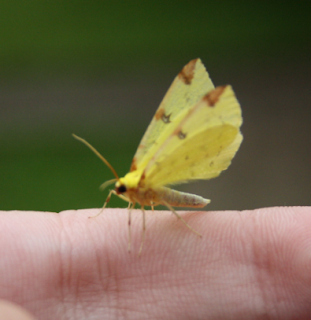
Common------Flame Shoulder
Common------White-pinion Spotted
Common------Small magpie
Common------Beautiful Golden y
Common------Silver y
Common------Rivulet
Common------Peach Blossom

Common------Clay

Common------Flame
Common------Clouded-bordered Brindle

Time: 10-12am
Species recorded: 20+
Individuals recorded: ...
Common------Udea olivialis
Common------Silver-ground carpet
Common------Common marbled carpet
Common------Common carpet
Common------Green carpet

Common------Grey pug
Local----------Square-spot
Common------Small fan-foot
Common------Snout
Common------Brimstone Moth

Common------Flame Shoulder
Common------White-pinion Spotted
 |
| A worn one, only just identifiable. The dust is the scales from all the noctuids that didn't want to sleep. |
Common------Small magpie
 |
| One of the biggest micros, and one of the few micros with a name that can be remembered. |
Common------Beautiful Golden y
Common------Silver y
Common------Rivulet
Common------Peach Blossom

Common------Clay

Common------Flame
Common------Clouded-bordered Brindle

Wales Moths (1st July 2013)
Yet more moths. I'm getting more each night which must be a good sign.
Time: 10-12am
Species recorded: 19+
Individuals recorded: ...
Common-------Ghost moth
Common-------Udea olivialis

Common-------Silver-ground carpet
Nb--------------Waved carpet
Common-------Rivulet

Common-------Grey pug
Common-------Currant pug

Common-------Mottled beauty
Common-------Willow beauty
Local-----------Square-spot
Common-------Small fan-foot
Common-------Snout
Common-------Common marbled carpet
Common-------Clouded border
Common-------Riband wave
Common-------Riband wave f. remutata
Common-------Common white wave
Common-------Buff ermine

Common-------Burnished brass

Common-------Blood-vein
Common-------Heart & dart
Time: 10-12am
Species recorded: 19+
Individuals recorded: ...
Common-------Ghost moth
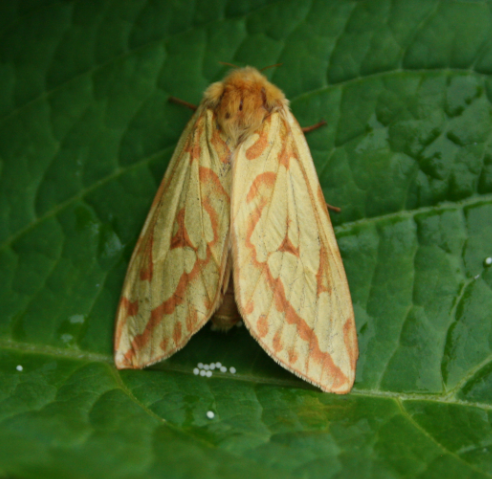 |
| This is the biggest moth I recorded. You may be wondering why it is called a ghost moth. Its named for the white male which flies with an odd pendulum-like hovering motion. |
Common-------Udea olivialis

Common-------Silver-ground carpet
Nb--------------Waved carpet
Common-------Rivulet

Common-------Grey pug
Common-------Currant pug

Common-------Mottled beauty
Common-------Willow beauty
Local-----------Square-spot
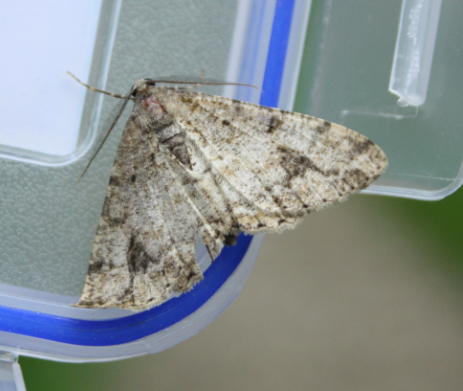 |
| One of the few "beauty" moths that you don't dread when it flies into the trap. Easily recognized by those square- shaped spots (squint harder if you can't see a square). |
Common-------Snout
Common-------Common marbled carpet
Common-------Clouded border
Common-------Riband wave
Common-------Riband wave f. remutata
Common-------Common white wave
Common-------Buff ermine

Common-------Burnished brass

Common-------Blood-vein
Common-------Heart & dart
Subscribe to:
Posts (Atom)