Along the way up we stopped for bird of prey activity and came across this delightful Nankeen (Australian) kestrel. A quaint but stunning bird, and one I had yet to see so far. The mist along the Australian landscape was also worth mentioning as it was rather picturesque.


In the entrance to the park little and musk lorikeets were screeching in the canopy along with a couple of purple-crowned lorikeets. It made for an interesting comparison on the similar but clearly different calls of the three species. Australian raven made a fly-by on the horizon; this is the first time I have seen this bird. We also had a fair number of white-winged chough.
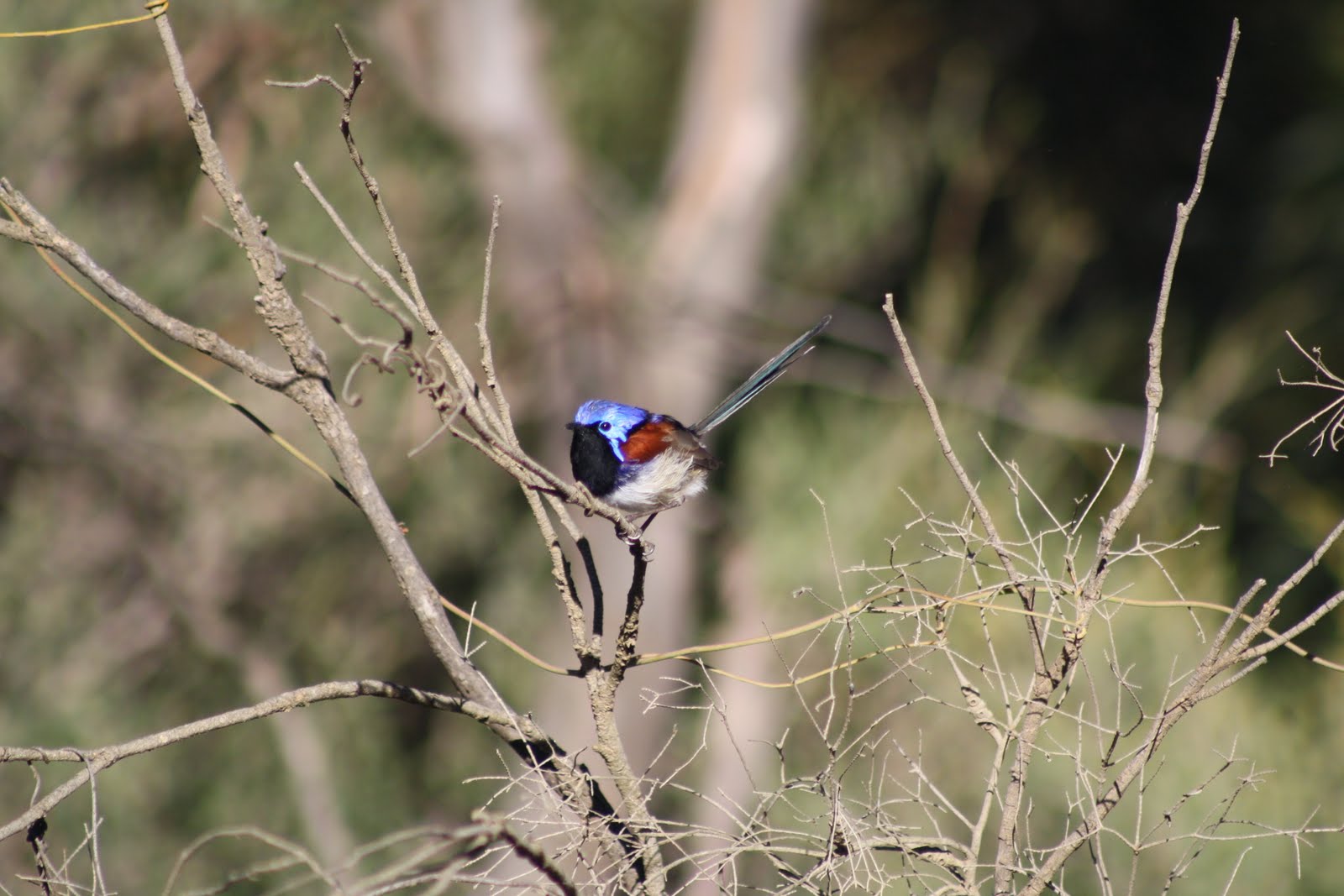
Getting back in the car we drove onwards to a mallee habitat with some interesting flora. Action happened quite quickly here so forgive the big paragraph! We had fuscous, white-eared, white-plumed, yellow-faced, a lone yellow-plumed and yellow-tufted honeyeater within mere moments as well as the ubiquitous noisy friarbird. When Steve made a quick trip to the car, I caught sight of a new bird fly in, a little friarbird. Steve caught eye of it, and wondered what the "strange cuckoo" was, he was pleasantly surprised to hear it was a little friarbird, something he did not expect to come across here. Shy Heathwren was heard soon after and brief views were had, as was the case with the fantastic Variegated Fairy-wren. The latter came very close and provided very good views. We took a short stroll through the fields and all that was located were a few more purple-crowned lorikeets and more honeyeaters. Before we left a crested bellbird was heard, an Australian raven offered slightly better views along with a collared sparrowhawk.



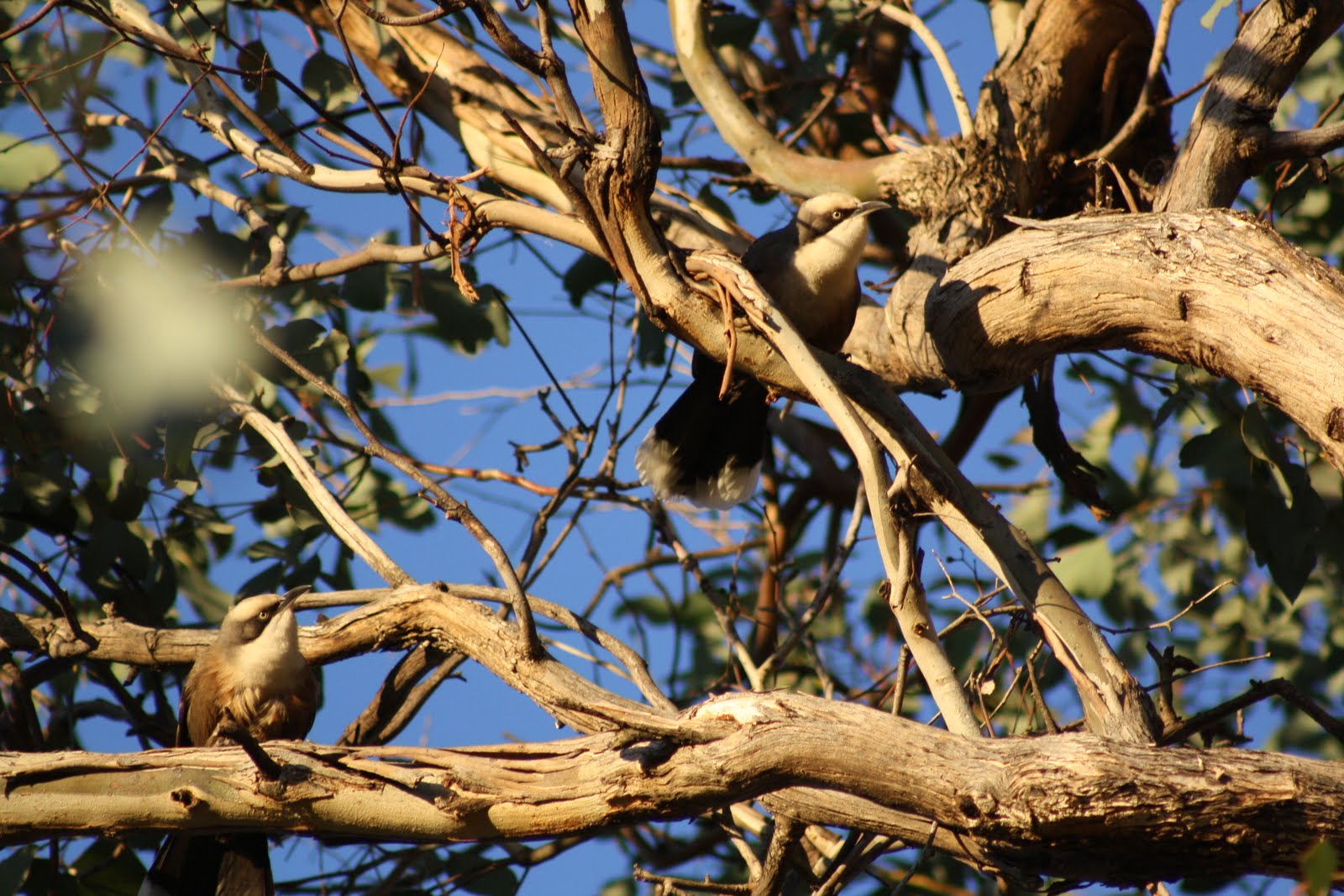
Down Meloette Road we had sightings of white-browed babbler, another new one for me. We heard fan-tailed cuckoo, inland thornbill and more crested bellbirds and while these three are all "life" birds, neither showed themselves which was unfortunate to say the least. Purple-gaped Honeyeater along with noisy friarbird soon showed up too which made for a great spectacle.A pair of yellow-rumped spotted pardalotes soon followed as well! Too bad the purple-gaped never really posed properly, would have looked some nicer shots of that purple gape!


Another drive and Steve pulled over once more in a more forested habitat. Here, there were several Yellow-plumed Honeyeaters which offered fairly good views. This was a bird that I fell in love with as soon as I saw it in the guide. As it happened this was the only time that there was no sun. Typical. But nontheless I got some acceptable photos.


Yet another drive onward and we came to a different type of forest again, with much taller trees. A pair of dull robins turned out to be Jacky Winter, which certainly stood still, though because of a distracting Brown Treecreeper I didn't end up getting that good shots of them. Restless Flycatcher passed over and Hooded Robin, another of my long-awaited birds, appeared in the shade. Unlike the Jacky Winter they (2 males and a female) did not offer that good looks.


Along the road somewhere, we stopped off to search for thornbills. Both Yellow and Buff-rumped, the last two local thornbills I have yet to find, appeared here as did a few Weebill, which certainly made it difficult for me; I ended up getting more shots of Weebills then the two thornbills, and I wasn't even going for them having got them at Woodlands Historic Park a while back. A large flock of Noisy Friarbird also offered some better-ish views.


At Camp Road, a few Diamond Firetails shot overhead and landed in a distant tree and soon vanished, offering the poorest views of any bird on that day. Unfortuitously, as this was a lifer for me, I had chosen to keep the poor shots. A single Brown Quail also popped out of the undergrowth on a driveby. At the next glade Steve pulled up by a post about a metre away from my window. While Steve was looking out the opposite window I looked at this post to see an overwintering Rufous Songlark that had been perching there right in front of me, not even moving when the car had come by this close. Steve was pleased to say the least. Getting out of the car Steve pointed out a foreign call; a Chestnut-rumped Heathwren, which he remarked to be a very rare sight up in Kamarooka. A very brief glimpse was had before it disappeared without trace, despite the fact it was in a small bush right in the center of the woodland, and we were both on either side! Restless Flycatcher came in very close here as well and so did a lone Crested Shrike-tit, the latter being one of those birds you never get bored of seeing. Before we left here, we managed to locate an infamous Black-chinned Honeyeater. Steve noted that we were "Lucky to get this one" and I agreed.


 Further on Chestnut-rumped Thornbill offered some nice views at the top of the trees as we made our way back. A beautiful bird indeed.
 On the open road, we stopped off on the side of the road in attempt to locate anything of interest. As it happened a female Golden Whistler, more Shy Heathwrens and a female Red-capped Robin popped up here. Not only that but to our surprise a Singing Honeyeater also turned up here. Certainly an unusual bird around here. On the second stop a Wedge-tailed Eagle soared overhead with a smaller bird which turned out to be a Brown Goshawk, something that I should have seen months ago.

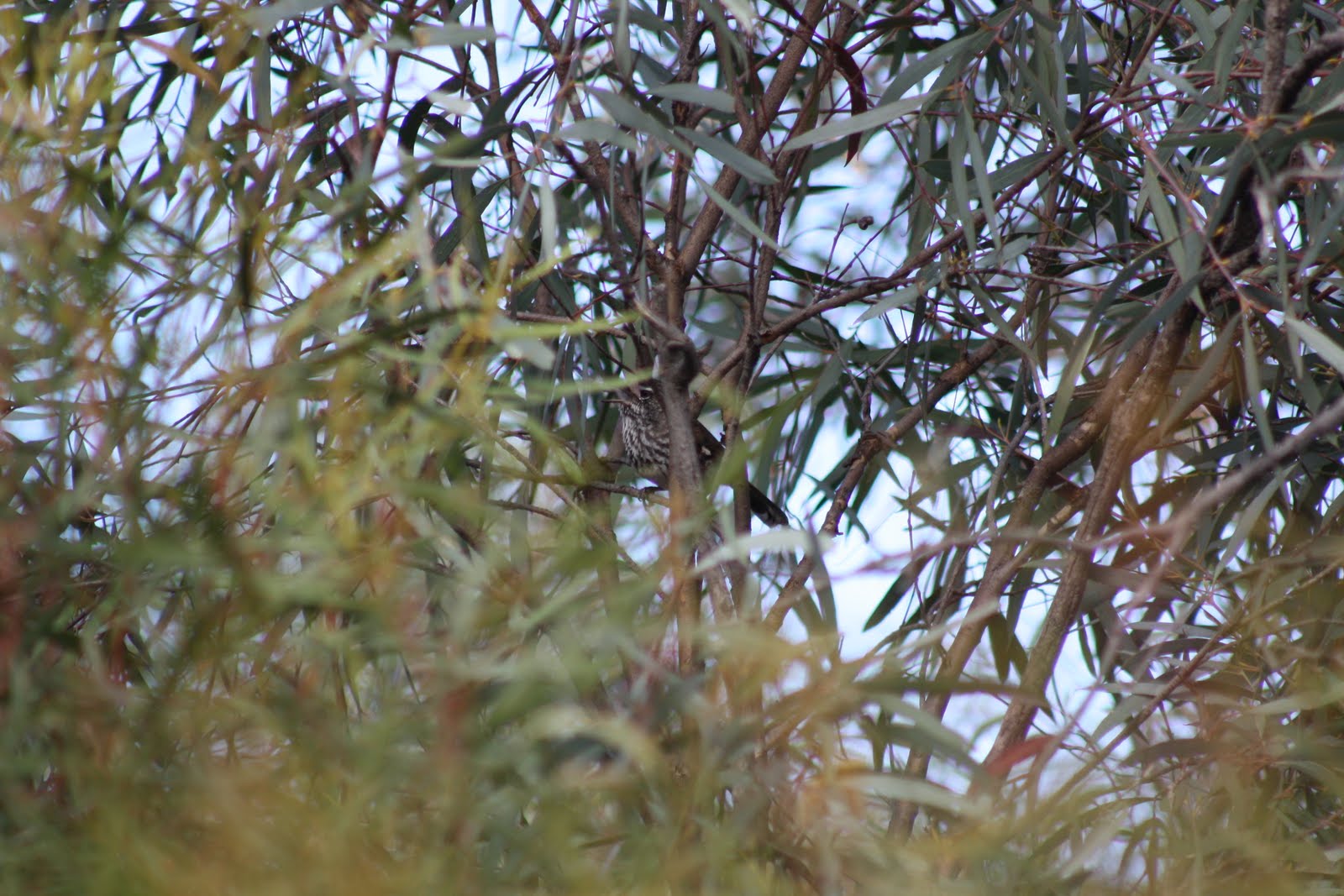


The last road out, Steve stopped the car again having "heard something". Sure enough in the trees beside we located a juvenile Gilbert's Whistler, which is an elusive bird indeed. A bit further in a forest glade and we saw the sun begin to set. Ahead of us was a little puddle with numerous honeyeaters darting in and out, and a single Common Bronzewing sitting on a branch in the sunlight. "What would you rather be doing?" Steve asked. What a brilliant occasion to end the day.


On the drive home we counted our wins (no losses except White-fronted which could not be found) and discussed our findings.
The total was 81, 25 lifers and with an amazing 19 honeyeaters seen that day including:
Singing Honeyeater (Not a common bird here.)
Purple-gaped Honeyeater (A local speciality)
New Holland Honeyeater
White-naped Honeyeater
Black-chinned Honeyeater ("Lucky to get this one," quote Steve)
Brown-headed Honeyeater
Yellow-faced Honeyeater (Commonest bird around with White-eared)
White-eared Honeyeater
White-plumed Honeyeater
Yellow-plumed Honeyeater
Tawny-crowned Honeyeater
White-fronted Honeyeater (Heard, not seen)
Yellow-tufted Honeyeater(Poorly seen)
Noisy Miner
Red Wattlebird
Noisy Friarbird
Little Friarbird (Steve has never seen this bird in the region before)
Blue-faced Honeyeater (Very briefly seen; still remains on the wanted list)